

Sleep & Airway Dentistry in Cumming & Sandy Springs
Clear Answers for Snoring, Sleep Apnea, and Airway Concerns
How Pinewood Helps With Sleep & Airway Concerns
We start by looking for signs that sleep-disordered breathing may be affecting your health or your mouth. These can include snoring, fatigue, morning headaches, dry mouth, clenching, grinding, worn teeth, cracked teeth, narrow arches, limited tongue space, jaw soreness, or difficulty feeling rested.
Obstructive sleep apnea is a medical condition, and a sleep study is often needed to diagnose it and understand severity. Pinewood can help identify airway concerns from a dental perspective and guide patients toward the appropriate next step, including medical sleep testing or coordination with a sleep physician when needed.
CPAP is a common and effective treatment for obstructive sleep apnea, and if it is working well, it should be used. For some patients, a custom oral appliance may be appropriate, especially when recommended after diagnosis or when CPAP is not tolerated. We help patients understand where dental options may fit into their broader sleep-health plan.
For some children and adults, narrow arches, limited tongue space, bite problems, or jaw development concerns may be part of the airway picture. Pinewood evaluates whether clear aligners, palatal expansion, MARPE adult expansion, or other airway-focused care may help support better function as part of a broader treatment plan.
Sleep & Airway Concerns Are a Spectrum
Not every airway problem looks like severe sleep apnea. Sleep-disordered breathing can range from snoring and upper airway resistance syndrome, or UARS, to obstructive sleep apnea.
Some patients have obvious pauses in breathing or oxygen drops during sleep. Others may simply feel unrested, clench or grind their teeth, wake with headaches, breathe through their mouth, or show signs that the tongue and airway do not have enough room.
Because sleep and breathing issues can show up in different ways, the goal is not to jump to one diagnosis or one treatment. At Pinewood Dentistry, we look at the teeth, bite, tongue space, arches, jaw development, nasal breathing, and airway clues to help you understand what may be contributing to the problem and what next step makes sense.
Signs & Symptoms
Sleep and airway problems can show up in more ways than snoring. Sleep-disordered breathing exists on a spectrum, from snoring and upper airway resistance syndrome, or UARS, to obstructive sleep apnea. Some people do not have dramatic oxygen drops but still experience disrupted sleep, increased breathing effort, clenching, grinding, morning headaches, fatigue, or waking up feeling unrested.
These concerns are common and often missed. Research estimates that obstructive sleep apnea affects hundreds of millions of adults worldwide, and many people with sleep-disordered breathing never realize their airway may be affecting their sleep, energy, or dental health.
Common clues may include loud snoring, gasping or choking during sleep, morning headaches, dry mouth, daytime fatigue, difficulty concentrating, clenching, grinding, worn teeth, cracked teeth, jaw soreness, narrow arches, limited tongue space, or feeling tired even after a full night of sleep. These signs do not prove someone has sleep apnea, but they can be clues that it is time to look deeper.

Treatment Options
Treatment for obstructive sleep apnea is not one-size-fits-all. Depending on the diagnosis, severity, anatomy, medical history, and patient goals, options may include CPAP, oral appliance therapy, lifestyle changes, medical care, airway-focused orthodontics, palatal expansion, MARPE adult expansion, myofunctional therapy, or referral to another provider when appropriate.
CPAP is a common and effective treatment, and if it is working well, it should be used. For some patients, a custom oral appliance may be appropriate, especially when recommended after diagnosis or when CPAP is not tolerated. For others, narrow arches, limited tongue space, bite concerns, or jaw development issues may make expansion or orthodontic planning part of the conversation.
Our goal is not to sell one solution. Our goal is to help you understand what may be contributing to the problem and what next step makes sense.

Have questions about your sleep and airway? Get the answers.
Common questions about snoring, sleep apnea, UARS, oral appliances, and airway-focused dental care.
Sleep-disordered breathing is a broad term for breathing problems that happen during sleep. It can range from snoring and upper airway resistance syndrome, or UARS, to obstructive sleep apnea.
Some patients have obvious pauses in breathing or drops in oxygen. Others may have increased breathing effort, fragmented sleep, clenching, grinding, morning headaches, fatigue, or waking up feeling unrested without realizing their airway may be involved.
Yes. Snoring, UARS, and obstructive sleep apnea are related, but they are not the same thing.
Snoring is vibration of airway tissues during sleep. UARS generally involves increased airway resistance and disrupted sleep without necessarily meeting the same criteria as obstructive sleep apnea. Obstructive sleep apnea involves repeated airway blockage or collapse that reduces or interrupts breathing during sleep.
Because these conditions can overlap, proper evaluation and testing are important.
A dentist can screen for signs that sleep-disordered breathing may be affecting your mouth, bite, jaw, airway, or overall health. These signs may include worn teeth, cracked teeth, clenching, grinding, dry mouth, narrow arches, limited tongue space, morning headaches, or jaw soreness.
At Pinewood Dentistry, we can also administer sleep testing when appropriate. The results are interpreted by our board-certified sleep physician, so patients receive a medically guided diagnosis and treatment recommendations rather than guesswork.
Our role is to connect the dots between your sleep, airway, teeth, bite, and long-term health. From there, we help you understand whether CPAP, oral appliance therapy, airway-focused orthodontics, palatal expansion, MARPE adult expansion, myofunctional therapy, or another option may make sense as part of your care plan.
Airway and sleep-breathing problems can show up in more ways than loud snoring. Common clues may include snoring, gasping or choking during sleep, morning headaches, dry mouth, daytime fatigue, difficulty concentrating, clenching, grinding, worn teeth, cracked teeth, jaw soreness, narrow arches, limited tongue space, or feeling tired even after a full night of sleep.
These signs do not prove that someone has sleep apnea, but they can be reasons to look deeper.
Treatment depends on the diagnosis, severity, anatomy, medical history, and patient goals. Options may include CPAP, oral appliance therapy, lifestyle changes, medical care, airway-focused orthodontics, palatal expansion, MARPE adult expansion, myofunctional therapy, surgery, or referral to another provider when appropriate.
There is no one-size-fits-all answer. Our role is to help patients understand what may be contributing to the problem and what next step makes sense.
If CPAP is working well for you, that is a good thing. Our goal is not to talk patients out of effective medical treatment.
For patients who already use CPAP, we may still evaluate dental and airway factors such as clenching, grinding, tooth wear, dry mouth, bite changes, narrow arches, tongue space, or jaw position. In some cases, dental care can support the broader sleep-health plan.
Sleep-disordered breathing and sleep apnea can have many contributing factors, including airway anatomy, nasal breathing, tongue position, jaw development, weight, muscle tone, inflammation, alcohol or sedative use, and other medical factors.
From an airway-focused dental perspective, one of the biggest patterns we look for is not enough room for the tongue. When the upper jaw is narrow or underdeveloped, the palate may be high, the nasal airway may be smaller, and the tongue may not have enough space to rest comfortably in the roof of the mouth. At night, that can contribute to increased airway resistance, mouth breathing, clenching, grinding, fragmented sleep, snoring, UARS, or obstructive sleep apnea.
This is why Pinewood looks beyond the teeth alone. We evaluate the bite, arch width, palate, tongue space, tooth wear, clenching patterns, nasal breathing, and airway clues to help patients understand whether oral appliance therapy, airway-focused orthodontics, palatal expansion, MARPE adult expansion, myofunctional therapy, CPAP, or medical coordination may make sense.
For some patients, narrow arches, limited tongue space, bite problems, or jaw development concerns may be part of the airway picture. Palatal expansion, airway-focused orthodontics, clear aligners, or MARPE adult expansion may help create more room for the tongue, improve dental arch form, and support better function.
Expansion is not a universal sleep apnea treatment, and it is not right for everyone. At Pinewood, we evaluate whether expansion may be part of a broader airway-focused plan.
For some patients, yes. A custom oral appliance may help support the airway during sleep by positioning the jaw or tongue in a way that reduces airway collapse. Oral appliances are often considered for patients with obstructive sleep apnea who cannot tolerate CPAP or who prefer an alternative when appropriate.
Oral appliance therapy should be based on proper diagnosis, thoughtful design, and follow-up care. It is not the same thing as a generic night guard.
No. Many people with airway concerns do not start with a severe sleep apnea diagnosis. Some patients come in because they snore, clench, grind, wake up tired, have morning headaches, crack teeth, struggle with dry mouth, or feel like they never get restful sleep.
Sleep-disordered breathing exists on a spectrum. The goal of an airway-focused dental evaluation is to help identify patterns, explain what we see, and guide you toward the right next step.
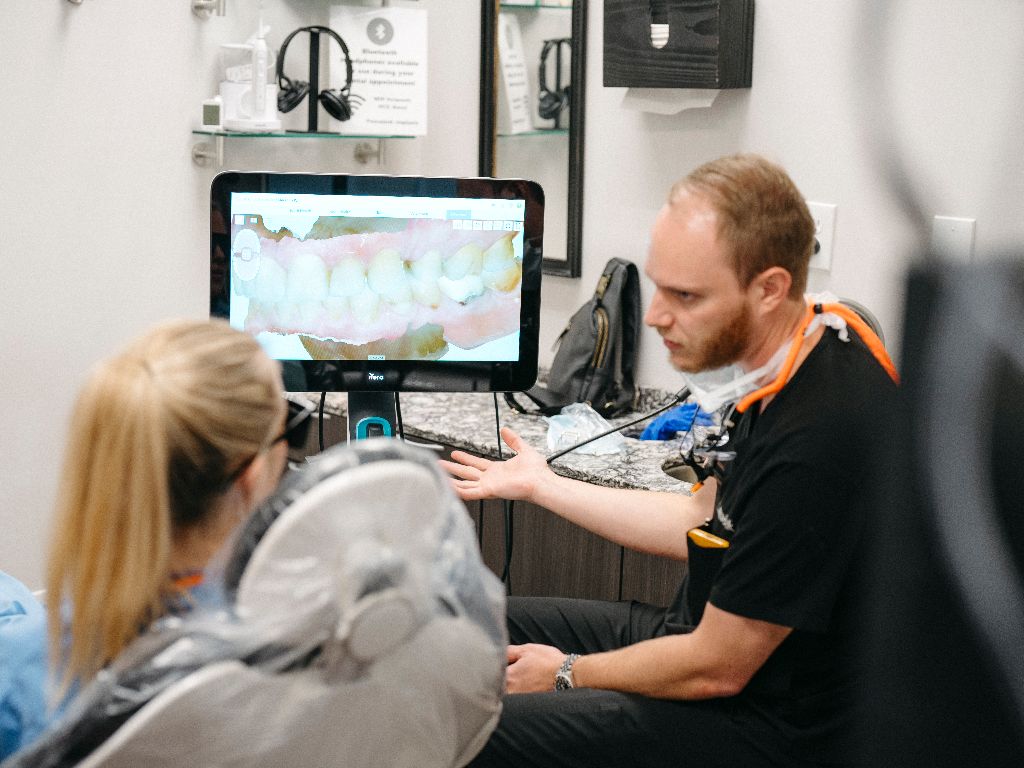
At an airway-focused dental evaluation, we look at your teeth, bite, jaw development, tongue space, arches, tooth wear, clenching or grinding patterns, and airway-related concerns. We may use photos, digital scans, X-rays, CBCT imaging, screening questionnaires, or sleep testing referrals when appropriate.
After the evaluation, we explain what we see, what it may mean, and what options could make sense for your health, sleep, teeth, and long-term function.